Quick Facts
Home Type: 1970 2-Story Home, 2,719 sq ft
Main Problems: Attic condensation, poor air sealing, aging second floor HVAC system
Solutions: Attic insulation replacement, air sealing, recessed light corrections, HVAC upgrade, rim joist insulation
Results: $4,000 rebate, $0 out-of-pocket cost, improved comfort and efficiency
Project Duration: Installed over 2 days
Overview
This two-story home in Berlin, NJ, was evaluated as part of a Tier III Whole Home Project through the South Jersey Gas (SJG) program. The homeowner reached out after experiencing long-term issues stemming from a previous attic insulation project completed several years earlier. Despite earlier upgrades, the home continued to suffer from comfort concerns and moisture problems, particularly in the attic.
During the consultation, we discussed how insulation and air sealing work together to control both energy loss and moisture movement. We also reviewed available rebates and financing options designed to make comprehensive upgrades more affordable. As part of the audit process, we modeled the home’s projected energy performance to determine savings potential and rebate eligibility. The modeling projected 15% total energy savings, qualifying the project for SJG incentives and a 0% loan option.
After reviewing the recommendations and understanding the importance of correcting the attic conditions, the homeowner decided to move forward with a full weatherization and HVAC improvement plan.
Before the Work
Prior to the project, the home had a history of attic condensation issues. An earlier contractor had insulated the attic and installed an on-demand system around 2017–2018. However, incomplete air sealing and roof complications contributed to ongoing moisture buildup. While portions of the attic had since been remediated, one section above the family room still contained problematic insulation from the earlier installation.
The attic also contained recessed lights that were not properly sealed, allowing warm, moist air to enter the attic space. This condition can increase the risk of condensation, especially during colder months.
In the basement, rim joist areas lacked proper sealing and insulation, creating additional pathways for heat loss and air leakage. Combined with an aging HVAC system, these deficiencies contributed to uneven temperatures and reduced overall efficiency.
Testing and Initial Data
A blower-door test was performed to evaluate overall air leakage. The home measured 2,600 CFM50, which indicates the home was already relatively tight compared to many houses of similar age and size. While this meant there was less opportunity for large air leakage reductions, it also highlighted that the remaining leakage points—particularly in the attic—were more concentrated and needed to be addressed carefully.
We also recorded the home’s ACH50 (Air Changes per Hour) at 5.73, showing that conditioned air was escaping primarily through specific areas such as the attic and ceiling transitions. In tighter homes like this one, air leakage into the attic can contribute to moisture issues when warm indoor air reaches colder surfaces. Correcting the recessed light leakage and improving bathroom exhaust ventilation helps control this moisture movement and protect the attic space moving forward.
Energy modeling performed during the assessment projected 15% total annual energy savings, which determined rebate eligibility and supported the decision to proceed with insulation and mechanical upgrades.
The goal of the work was to reduce unwanted airflow, stabilize attic conditions, and improve HVAC performance to enhance comfort and reduce energy usage.
What We Did
Over the course of the project, the team completed a targeted whole-home energy upgrade.
Attic Improvements
The attic insulation was removed and replaced where necessary, and the space was properly air sealed to address long-standing condensation concerns. Blown-in cellulose insulation was installed to achieve recommended R-values for the region. The attic hatch was sealed, and recessed lights were corrected and capped to prevent conditioned air from escaping into the attic.
Ventilation Upgrades
Bath exhaust improvements were completed to help manage indoor humidity and reduce moisture migration into the attic space.
Basement Air Sealing & Insulation
Rim joist areas were sealed and insulated, helping eliminate drafts and reduce heat loss at the foundation level.
HVAC System Upgrades
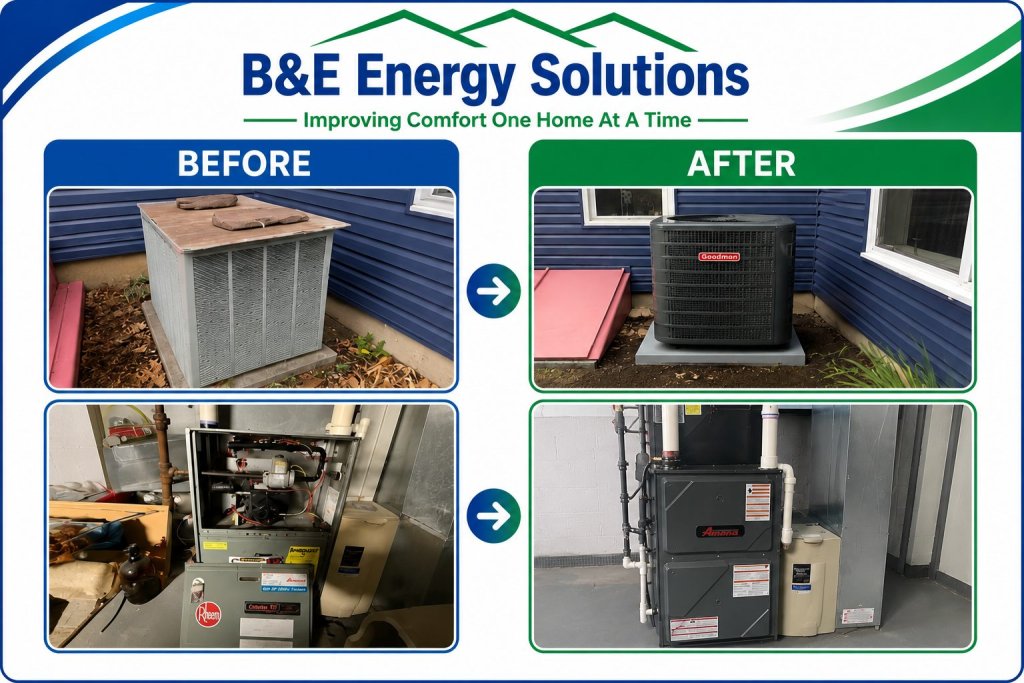
The existing furnace and air conditioning equipment was replaced by Accurately Controlled Environments (ACE). The new furnace is 97% AFUE and the new air conditioning system operates at 16.00 SEER2 with an EER2 of 12.50, improving cooling efficiency and seasonal performance. These upgrades help the home maintain more consistent temperatures while reducing system runtime.
Results and Testing After the Work
A follow-up blower-door test confirmed measurable improvement, with airflow reduced from 2,600 CFM50 to 2,230 CFM50, a reduction of 370 CFM. While this reduction is not as large as what is sometimes seen in leakier homes, it reflects that the house was already relatively tight before improvements were made.
The most important part of this work was targeting where the air leakage was occurring, particularly in the attic. By sealing recessed lights, improving the attic hatch, and addressing exhaust ventilation, we reduced the amount of warm, moist air that can travel from the living space into the attic. Controlling this airflow is critical in tighter homes because it helps prevent moisture buildup and condensation issues, protecting both the attic insulation and the roof structure over time.
By tightening leakage points in the attic and basement, the home now retains conditioned air more effectively. A tighter home helps keep warm air inside during winter and cool air inside during summer, allowing the HVAC system to run less frequently and use less energy.
This directly contributes to lower monthly utility bills, more stable indoor temperatures, and improved overall comfort.
Financial Impact
The total project cost was $19,894, but the homeowner qualified for a $4,000 rebate through the SJG program. The remaining balance was financed through a 0% loan, resulting in $0 out-of-pocket cost at installation. Energy modeling projected long-term savings through reduced heating and cooling demand.
Comfort and Everyday Benefits
With attic conditions corrected and insulation upgraded, the home now experiences more stable indoor temperatures and reduced draftiness. Proper air sealing and recessed light corrections help prevent future moisture concerns while improving efficiency.
The upgraded HVAC system provides more balanced airflow and improved performance, reducing hot and cold spots throughout the home.
Summary
This project highlights how correcting insulation, air sealing, and mechanical systems can resolve long-standing comfort and moisture concerns in an older home.
By addressing the root causes of attic condensation and improving building performance, the homeowner now benefits from a more comfortable, efficient, and durable living environment, all completed with no upfront cost through the SJG Whole Home Program.